As a valve oil seal supplier who’s spent the last 12 years walking shop floors, talking mechanics through common engine failures, and testing seal designs in our in-house lab, I get asked this question at least once a week: “Can a valve oil seal actually keep dirt and debris out of my engine?” Most of the time, the person asking is a small repair shop owner, a fleet manager, or even a weekend hobbyist who’s dug into an old V8 and found grit caked on the inside of the valve train. It’s not an unreasonable question—if you’ve seen what happens when debris gets past critical engine components, you’d want to know exactly how much your valve seal is doing to block it. Valve Oil Seal
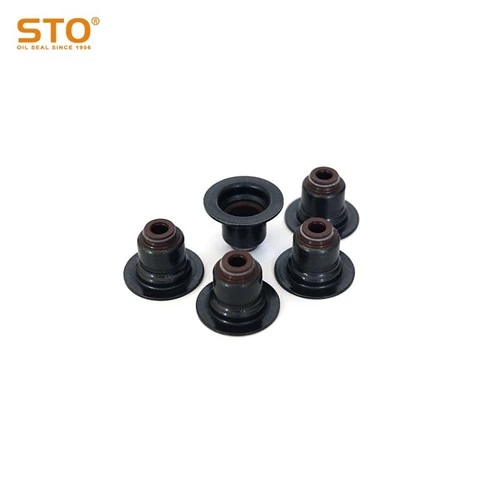
Let’s start with the basics: what a valve oil seal actually is, because a lot of people mix it up with other engine seals (like the main crankshaft seal or the camshaft seal). A valve oil seal is a small, ring-shaped component mounted at the top of each intake and exhaust valve stem, right where the valve pushes through the cylinder head. Its primary job, of course, is to control engine oil flow: it keeps excess oil from seeping past the valve stem into the combustion chamber, where it would burn off as blue exhaust smoke and foul spark plugs. But what many users don’t realize is that its design includes a built-in debris barrier that’s just as critical to engine longevity.
To understand that, you have to look at how the valve train works. The valvetrain is a constantly moving system: each valve opens and closes thousands of times per minute, driven by the camshaft, rocker arms, and springs. Between the valve stem and the guide (the hole the stem slides through in the cylinder head), there’s a tiny gap—no bigger than a human hair, but large enough that if dirt, sand, metal shavings, or road grime get into that space, they can act like an abrasive. Over time, that abrasive will wear down the valve guide, the valve stem, and even the seal itself. Left unchecked, that debris can work its way past the valve guide into the combustion chamber, where it will scratch cylinder walls, score piston rings, and turn a minor repair into a full engine rebuild.
This is where the valve oil seal’s anti-debris function comes into play. Modern valve oil seals are not just simple rubber rings—they’re engineered with two separate contact areas: one that regulates oil flow to the valve stem, and a primary lip that faces the outside of the cylinder head, and a secondary lip that faces the inside of the valve train. The outside lip is designed to create a tight, smooth barrier against debris that’s sitting on the top of the cylinder head, where valve springs, retainers, and rocker arms sit. That debris could be anything: dust from a dusty worksite, road salt and grime from winter driving, tiny metal shavings from machining the cylinder head during a rebuild, or even lint from a dirty shop rag left near the engine bay during a repair.
The secondary lip, meanwhile, works with the first to block any debris that might have snuck past the outer edge—say, from a loose intake manifold gasket that’s letting in airborne particles, or a clogged air filter that’s leaking small amounts of dust. It creates a second line of defense, ensuring that even if one lip is compromised by high heat or wear, the other will still keep grit away from the sensitive valve stem and guide. I’ve seen this in action dozens of times: last year, a fleet manager brought in a truck that had been running on a dusty gravel route for three years without a filter change. The valve oil seals we supplied had intact outer and inner lips, and even though a small amount of dust did manage to touch the seals, the grit never reached the valve train. The truck only needed a regular valve adjustment, not a $7,000 engine overhaul.
But here’s the catch: not all valve oil seals are created equal. A lot of cheap, aftermarket seals you’ll find at auto parts stores are made with low-grade rubber that hardens or cracks after a few thousand miles, especially in engines that run at high temperatures (like diesel truck engines or performance cars). These seals often skip the dual-lip design entirely, or use thin, flimsy lips that can’t create a tight enough seal to block debris. We tested a competitor’s “economy” seal in our lab last year, simulating 50,000 miles of dusty driving. By the 20,000 mile mark, their outer lip had worn down by 60%, and debris was already seeping past into the valve train. That’s why, as a supplier, we invest in materials like hydrogenated nitrile butadiene rubber (HNBR) for our seals—it can withstand temperatures up to 300°F, resists cracking from harsh chemicals, and maintains its shape even after years of use. We also test every seal for lip tension and contact pressure, because a seal that’s too loose won’t block debris, and one that’s too tight will wear out the valve stem faster than the debris would.
Another common misconception: some mechanics think the air filter is the only line of defense against engine debris, so the valve oil seal is just a “nice-to-have” part. That’s partially true—if your air filter is working properly, it will block 99% of airborne particles before they ever reach the intake manifold. But no air filter is 100% perfect. Over time, even a high-quality air filter will develop small gaps from wear, or become clogged and allow tiny particles to bypass it. In heavy-duty applications (like construction equipment or delivery trucks that run on unpaved roads), the air filter can get overwhelmed by fine dust particles that are small enough to slip through filter media. That’s where the valve oil seal becomes irreplaceable—it’s the last barrier between external grit and the internal engine components that keep your truck or car running.
I remember a customer who worked with a fleet of road construction vehicles calling us in 2021. They were going through a set of valve guides every 18 months, because debris from the gravel roads was wearing them down. The mechanic had replaced the air filters, and the cylinder heads had been machined correctly, but the problem persisted. When we inspected their old valve oil seals, we found that they had only a single, thin outer lip—no secondary lip to catch any debris that slipped past. We supplied them with our dual-lip, HNBR seals, and they haven’t replaced a valve guide in the three years since. That’s the kind of real-world result that proves this component does way more than just control oil.
Of course, a valve oil seal can’t do its job if it’s installed incorrectly. I’ve seen too many engines damaged because a seal was twisted during installation, or the lip was flipped around, so it was facing the wrong direction (the oil-control lip should face the inside of the engine, not the outside). Even the best seal in the world won’t block debris if it’s not seated properly in the cylinder head. That’s why we always recommend that mechanics or DIYers take the time to follow proper installation procedures, and that we offer free technical support to any customer who needs help identifying the right seal for their engine. We don’t just sell a part—we provide guidance to make sure that part works as it’s supposed to.
So to answer the question directly: yes, a properly designed, correctly installed valve oil seal absolutely can prevent dirt and debris from entering the engine. It’s not a primary defense like the air filter, but it’s a critical secondary line of protection that keeps small, abrasive particles from causing irreversible damage to valve stems, guides, cylinder walls, and pistons. The key is choosing a seal that’s built for durability and engineered with anti-debris features, rather than a cheap, one-size-fits-all part that will wear out quickly.
Wrapped V Belt At the end of the day, we’re all looking to keep our engines running longer and with fewer repairs. A valve oil seal is a small component, but its impact on engine longevity is huge. If you’re dealing with excessive blue exhaust smoke, wear on valve guides, or constant engine rebuilds from debris damage, it might be time to check your valve oil seals—and if you’re looking for a reliable, tested seal that’s designed to block grit, don’t hesitate to reach out to discuss your specific needs.
References
- Internal Combustion Engine Fundamentals, John B. Heywood, McGraw-Hill Education, 2018.
- Automotive Engineering: Powertrain, D. R. Olsen, SAE International, 2019.
- Seal Design for Engine Applications, Technical Report, Society of Tribologists and Lubrication Engineers, 2020.
- Heavy Duty Engine Component Durability Report, American Trucking Associations, 2021.
Xingtai Boshuo Auto Technology Co., Ltd.
Xingtai Boshuo Auto Technology Co., Ltd. is one of the most professional valve oil seal manufacturers and suppliers in China, featured by quality products and low price. Please rest assured to wholesale bulk customized valve oil seal made in China here from our factory. Welcome to contact us for pricelist and free sample.
Address: No. 58 Quannan East Street, Xiangdu District, Xingtai City, Hebei Province
E-mail: sherry1@bs-belt.com
WebSite: https://www.bsbelts.com/
