Hey there! I’m a supplier of titanium nuts. Over the years in this business, I’ve had a fair share of customers asking me about the standards these titanium nuts meet. So, I thought it’d be cool to write this blog to shed some light on this topic. Titanium Nut

First off, let’s talk about why titanium nuts are so popular. Titanium is an amazing material. It’s super lightweight, yet it has high strength. It also has excellent corrosion resistance, which means titanium nuts can last a long time even in harsh environments. These properties make titanium nuts a top – choice for many industries, from aerospace to automotive and marine.
Now, let’s get into the standards. One of the most well – known standards for titanium products is the ASTM (American Society for Testing and Materials) standard. ASTM has a whole series of specifications for titanium and titanium alloys. When it comes to titanium nuts, ASTM B348 is often the go – to standard. This standard defines the requirements for wrought titanium and titanium alloy bars, billets, and forgings. Since nuts are essentially forged parts, they fall under this scope.
Under ASTM B348, there are different grades of titanium. For example, Grade 2 titanium is commercially pure titanium. It has good corrosion resistance and is relatively easy to work with. A lot of our general – purpose titanium nuts are made from Grade 2 titanium. The standard specifies the chemical composition of this grade. It should have at least 99% titanium, with small amounts of other elements like iron, carbon, nitrogen, and hydrogen carefully controlled. For instance, the maximum iron content should be 0.2%, and the maximum carbon content should be 0.08%.
When it comes to mechanical properties, ASTM B348 also sets the bar. For Grade 2 titanium, the minimum yield strength should be 240 MPa, and the minimum tensile strength should be 345 MPa. These strength values ensure that the nuts can withstand a certain amount of stress without deforming or breaking.
Another important aspect is the dimensional accuracy of the nuts. The American National Standard Institute (ANSI) and the Society of Automotive Engineers (SAE) have standards for nut dimensions. These standards define things like the pitch diameter, the height of the nut, and the thread profile. For example, the Unified Thread Standard (UTS) is widely used in the United States. It specifies the size, pitch, and form of the threads for nuts and bolts. Our titanium nuts are manufactured to meet these dimensional standards precisely. This is crucial because if the nuts don’t fit well with the corresponding bolts, it can lead to all sorts of problems, like loose connections or even equipment failure.
In the aerospace industry, titanium nuts need to meet even more stringent standards. The Aerospace Material Specification (AMS) is a set of standards developed by SAE for materials used in the aerospace field. AMS standards for titanium nuts cover everything from material quality to manufacturing processes and testing procedures. For example, AMS 4928 is a specification for titanium alloy forgings and billets for aerospace applications. If our titanium nuts are going to be used in an aircraft, they must comply with this standard.
The manufacturing process of titanium nuts also has its own set of standards. We use precision machining techniques to make our nuts. And the ISO 9001 quality management system standard plays a big role here. It’s a globally recognized standard that ensures that our manufacturing processes are consistent and that the products we deliver meet high – quality standards. We follow strict procedures from raw material inspection to the final product testing. Every batch of titanium we receive is tested for its chemical composition and mechanical properties. During the machining process, we use advanced equipment to ensure the accuracy of the dimensions. And after the nuts are made, we conduct surface finish inspections, hardness tests, and other quality checks.
For the marine industry, corrosion resistance is of utmost importance. The International Organization for Standardization (ISO) has standards related to corrosion – resistant materials. ISO 10273 specifies the requirements for fasteners made from corrosion – resistant steels and non – ferrous metals. Although titanium is different from steel, many of the principles in terms of preventing corrosion apply. For example, the surface passivation process we use for our titanium nuts is in line with some of the best practices recommended by ISO standards. Surface passivation creates a thin, protective oxide layer on the surface of the nut, which further enhances its corrosion resistance.
Now, I want to talk a bit about the testing methods we use to verify that our titanium nuts meet these standards. We use non – destructive testing (NDT) methods like ultrasonic testing (UT) and magnetic particle inspection (MPI). Ultrasonic testing is used to detect internal flaws in the nuts, such as cracks or voids. It works by sending high – frequency sound waves into the material and analyzing the echoes. Magnetic particle inspection, on the other hand, is used to detect surface and near – surface flaws. We apply a magnetic field to the nut and then sprinkle iron particles on it. If there are any flaws, the iron particles will accumulate at the defect sites, making them visible.
In addition to NDT, we also conduct destructive testing. Tensile testing is one of the most common types of destructive tests. We take a sample nut and subject it to a gradually increasing tensile force until it breaks. By measuring the force at which the nut breaks, we can determine its ultimate tensile strength. We also perform hardness testing using a hardness tester. This helps us ensure that the nuts have the right hardness, which affects their wear resistance and ability to withstand stress.
Okay, so now you know a whole lot about the standards that titanium nuts need to meet. Whether it’s the chemical composition, mechanical properties, dimensional accuracy, or corrosion resistance, there are strict rules to follow. And as a reliable supplier, we make sure that all our titanium nuts comply with these standards.
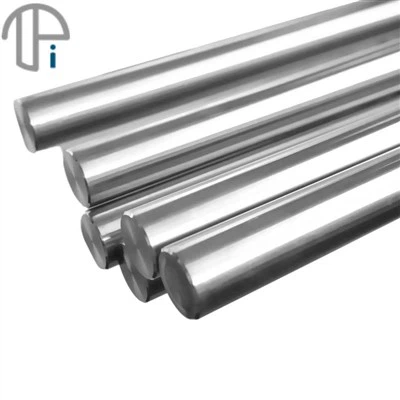
If you’re in the market for high – quality titanium nuts, I’d love to have a chat with you. Whether you’re from the aerospace, automotive, marine, or any other industry, we can provide you with the right titanium nuts to meet your needs. Just drop us a line, and let’s start a conversation about how we can work together. We’re always ready to offer the best solutions and the most competitive prices. Looking forward to hearing from you!
Titanium Fasteners References:
- ASTM B348 – Standard Specification for Wrought Titanium and Titanium Alloy Bars, Billets, and Forgings
- American National Standard Institute (ANSI) – Standards for fastener dimensions
- Society of Automotive Engineers (SAE) – Unified Thread Standard (UTS), Aerospace Material Specification (AMS)
- ISO 9001 – Quality management systems requirements
- ISO 10273 – Fasteners made from corrosion – resistant steels and non – ferrous metals
Baoji Top Titanium Industry Co., Ltd.
As one of the most professional titanium nut manufacturers and suppliers in China, we’re featured by quality products and good price. Please rest assured to buy bulk titanium nut in stock here and get quotation from our factory. Customized orders are welcome.
Address: No. 2, South Section Of Phoenix 2nd Road,High-Tech Zone, Baoji,Shaanxi, China (Mainland)
E-mail: sales@bjtopti.com
WebSite: https://www.china-topti.com/
