If you’re like most homeowners and small business owners looking to add a curved carport, one of the first questions that pops up isn’t just about design—it’s about space. As a curved carport supplier who’s spent 12 years helping people navigate this exact decision, I’ve seen too many projects stall because someone guessed wrong: either they bought a structure that’s too cramped for their trucks, or they wasted money on a footprint that could’ve fit two cars. The good news is you don’t need a degree in engineering to get this right—you just need to break down the numbers and account for the small, easy-to-miss details. Curved Carport
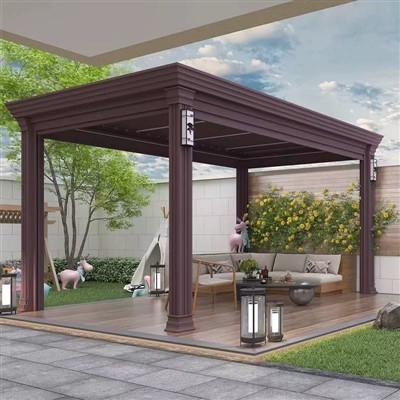
Let’s start with the basics: a curved carport isn’t a tiny shed or a straight-span metal awning. Its curved roof follows a smooth, rounded arc, which means its horizontal footprint is different from its headroom or side clearance. That curved shape isn’t just for looks—it keeps rain and snow sliding off faster than a flat roof, but it also means every inch of space serves a specific purpose. I’ve had a customer in suburban Atlanta call last month because he ordered a 20-foot-wide carport thinking it fit his pickup, only to realize the curved edges left 6 inches of extra gap on the passenger side when he pulled in. Small mistake, big headache. Let’s avoid that.
First, you need to size for your vehicles—and not just their length and width. The average passenger car is 14 to 16 feet long and 6 to 7 feet wide, but if you own a pickup, SUV, van, or work truck, those numbers jump: pickups often clock in at 19 to 22 feet long and 6.5 to 8 feet wide, while cargo vans can hit 21 feet long and 7.5 feet wide. For a single-car curved carport, that means you’ll need a minimum length of 21 feet. Wait, I know what you’re thinking: why not just match the car’s length? Because you need room to open your doors without hitting the carport posts or the curved roof, and room to pull in and out without scraping your bumper. Even for a compact sedan, I never recommend less than 19 feet in length for a single unit—for larger vehicles, 22 to 24 feet is the sweet spot. For width, the minimum is 10 feet if you’re just parking a small car, but 12 to 14 feet is standard for most households; that gives you 2.5 to 3 feet of clearance on each side, enough to grab a jacket out of the backseat without squeezing.
Now, the curved part of the carport is where most people mess up. The roof’s arch height—how high the peak is from the ground—directly affects headroom, which is non-negotiable if you own a taller vehicle like a van, a box truck, or even a RV that you might park there occasionally. For passenger cars and most pickup trucks, a 8-foot peak is enough, but if you have a work van or tow a trailer, go for 9 to 10 feet. What people forget is the curve tapers down toward the sides: the height of the curved roof at the edge is usually 6 to 6.5 feet, which is just enough to clear a car’s roof, but if your truck has a tall camper shell, that edge height might be too low. I always tell customers to measure the highest point of their vehicle (roof rack, camper shell, antenna) before picking a peak height; add 12 inches, and that’s your minimum peak height for the curved carport.
Wait, what if you want to park two cars under one curved carport? That’s a common request, especially for people with two kids who drive, or small businesses with two work trucks. For two standard-sized cars, you’ll need a minimum of 22 feet in length and 18 feet in width. But if you have two larger vehicles—like a pickup and an SUV—you’ll want to bump that to 24 feet long and 20 feet wide. The curve here is important: a two-car curved carport doesn’t just stretch a straight roof over two cars; the arch stays consistent, so the middle of the roof is the highest point, which leaves even more space in the center for loading or unloading. I installed one for a landscaping company in Phoenix last year with a 26-foot width and 24-foot length, and they fit three work trucks easily—even had room for a small mower to park under the edge. That’s the bonus of the curved design: it doesn’t waste space like a straight-span carport, which often has narrow side clearance for multiple vehicles.
Now, don’t forget the space around the carport itself. This is the part that’s not on the product spec sheet, but it’s what will save you from having to regrade your driveway or hit a tree when you pull in. Your curved carport needs clearance from the edge of your property line, your home’s foundation, any existing trees, or garden beds. Most local building codes require 1 to 2 feet of clearance on each side, and 3 to 5 feet of clearance in front and back, because you need room to anchor the posts (curved carports are usually anchored with concrete footings, so you can’t set them right on the property line) and space to walk around the carport to maintain it. I once had a customer in Texas who tried to skip this clearance, and when his next-door neighbor put up a fence, he realized the carport’s edge was only 6 inches away—he had to take half a foot off the roof curve, which weakened the snow load rating. Not worth it. Also, check your local building codes: some areas have restrictions on carport height or setbacks, so it’s always a good idea to confirm those before you finalize your measurements.
What about unique uses? A lot of my clients use curved carports for things other than vehicles: a patio for outdoor dining, a spot for a boat or RV, or even a covered workspace for tools. If you’re using it for a boat, which is often 20 to 25 feet long, add 3 feet of clearance for the bow and stern, so your length jumps to 28 feet minimum. For an RV, which can be 30 to 40 feet long, I recommend a 40-foot length and 14 to 16 feet width, with a peak height of 10 feet to clear the RV’s roof. If you’re using it as a covered patio, you can adjust the size to fit your deck: 12 feet wide by 20 feet long works for a small dining area, while 16 feet wide by 30 feet long gives you space for a grill, outdoor furniture, and even a small fire pit. The curved roof is perfect for this because it keeps the space cooler than a flat patio cover, thanks to the airflow from the arched design.
Let’s talk about common mistakes I see every day. First, people think a curved carport’s size is the same as a straight carport, but that’s not true. A straight 20-foot-wide carport might have a flat roof that goes from post to post, but a curved 20-foot-wide carport’s roof is narrower at the edges, so you actually need a 22-foot total width to fit two cars. Second, they skip measuring their vehicle’s highest point—if your truck has a roof rack that adds 10 inches to its height, an 8-foot peak will mean the roof hits the curve. Third, they forget about snow and wind load, which affects the size too. If you live in an area with heavy snow, you’ll need a larger curved carport with a steeper arch to let snow slide off, and that arch might add a foot or two to the required width. I recently designed a curved carport for a customer in Maine, who needed a 24-foot width to handle 3 feet of snow in winter— that’s a size he never would’ve guessed if he didn’t account for the local climate.
Another thing: customization. As a curved carport supplier, I work with customers to adjust sizes for their specific needs. If you have a driveway that’s uneven, or you want the carport to extend a few feet past your garage door to keep rain off your walkway, we can tweak the length. If you have a narrow side yard, we can design a compact curved carport with a slightly lower peak (but still enough to clear your car) to fit the space. The key here is to be specific about what you’re storing under it, not just “a car”—tell me if it’s a compact sedan, a crew cab pickup, a boat, or an RV, and I can give you the exact dimensions you need.
Let’s wrap this up with a quick checklist to make sure you get the size right: first, measure your primary vehicle’s length, width, and highest point (add 12 inches to height for headroom). Second, decide if you need space for more than one vehicle or other items (boat, patio, etc.). Third, add 2 to 3 feet of clearance on all sides for doors, walking, and maneuvering. Fourth, check local building codes for setbacks and height limits. Fifth, account for your climate’s snow or wind needs (steeper arch = slightly wider footprint). If you follow these steps, you won’t end up with a carport that’s too small or a waste of space.

At the end of the day, a curved carport is an investment that lasts 20+ years, so getting the size right the first time saves you time, money, and frustration down the line. If you’re still not sure how much space you need, don’t guess—reach out to us to talk through your specific needs. We’ve helped thousands of homeowners and business owners pick the perfect curved carport size, and we can help you too. Let’s work together to make sure your structure fits your space and your vehicles, no mistakes, no regrets.
Awning References
- International Code Council. 2021 International Residential Code: One- and Two-Family Dwellings. International Code Council, 2020.
- Aluminum Association. Specifications for Aluminum Structures, 10th ed. Aluminum Association, 2019.
- National Oceanic and Atmospheric Administration. U.S. Climate Normals: Snowfall and Wind Data, 1991-2020. NOAA, 2021.
- Automotive Industry Association. 2023 Passenger Vehicle and Truck Dimensions Report. Automotive Industry Association, 2023.
- Portable Structure Manufacturers Association. Curved Carport Design Guidelines for Residential and Commercial Use. PSMA, 2022.
Guangdong Fanxi Youpin Intelligent Technology Co., Ltd.
We are one of the most professional curved carport manufacturers and suppliers in China, also support customized service with low price. We warmly welcome you to buy high quality curved carport for sale here from our factory. If you have any enquiry about pricelist, please feel free to email us.
Address: No. 22-2 Of Xiaodong Industrial Zone, Xiaodong Second Economic Society, Yanfeng Community, Shishan Town
E-mail: SunnyChueng@fshpyp.cn
WebSite: https://www.vancyoutdoor.com/
