Hey there! As a supplier of brushless DC motors, I often get asked about the rotor design of these motors. So, I thought I’d take a few minutes to break it down for you. Brushless Dc Motor

First off, let’s talk about what a brushless DC motor is. In simple terms, it’s an electric motor that uses an electronic controller to switch the current flow in the motor windings. This is different from a traditional brushed DC motor, which uses physical brushes to make the electrical connections. The main advantage of a brushless DC motor is that it has fewer moving parts, which means less wear and tear and a longer lifespan.
Now, let’s get to the heart of the matter – the rotor design. The rotor is the rotating part of the motor, and its design plays a crucial role in determining the motor’s performance.
Types of Rotor Designs
There are a few different types of rotor designs commonly used in brushless DC motors, and each has its own pros and cons.
Permanent Magnet Rotors
The most common type of rotor design in brushless DC motors is the permanent magnet rotor. In this design, permanent magnets are mounted on the surface or inside the rotor. The magnets create a fixed magnetic field, which interacts with the magnetic field produced by the stator windings to make the rotor turn.
One of the biggest advantages of a permanent magnet rotor is its high efficiency. Since the magnets provide a constant magnetic field, there’s no need to use additional electrical energy to create the field. This means less energy is wasted as heat, and the motor can convert more electrical energy into mechanical energy.
Permanent magnet rotors also offer high torque density, which means they can produce a lot of torque for their size. This makes them ideal for applications where space is limited, like in drones or electric vehicles.
However, there are some downsides to permanent magnet rotors. The cost of the permanent magnets can be relatively high, especially if you’re using high – performance magnets like neodymium. Also, the magnets can lose their magnetism over time if they’re exposed to high temperatures or strong magnetic fields, which can affect the motor’s performance.
Reluctance Rotors
Another type of rotor design is the reluctance rotor. A reluctance rotor doesn’t have any permanent magnets. Instead, it has a specially shaped iron core. The magnetic field produced by the stator windings tries to align the rotor’s iron core with the field, causing the rotor to turn.
Reluctance rotors are relatively simple and inexpensive to manufacture. They also have good reliability since there are no magnets that can lose their magnetism.
But, reluctance motors typically have lower efficiency compared to permanent magnet motors. Since the rotor relies on the magnetic reluctance (the opposition to the magnetic field) to generate torque, there’s more energy loss in the form of heat. They also usually have lower torque density, so they’re not as well – suited for applications that require high torque in a small package.
Hybrid Rotors
Some manufacturers also use hybrid rotors, which combine features of both permanent magnet and reluctance rotors. A hybrid rotor might have permanent magnets embedded in an iron core. This design aims to take advantage of the high efficiency and torque density of permanent magnet rotors while still benefiting from some of the advantages of reluctance rotors, like lower cost and improved reliability in certain conditions.
Rotor Shape and Configuration
The shape and configuration of the rotor also have a big impact on the motor’s performance.
Round Rotors
Round rotors are the most common shape. They offer a smooth and balanced rotation, which is important for applications where vibration and noise need to be kept to a minimum. Round rotors are also relatively easy to manufacture, which helps keep costs down.
Salient Pole Rotors
Salient pole rotors have protruding poles on the surface of the rotor. This design can increase the interaction between the rotor and the stator’s magnetic field, which can lead to higher torque production. However, salient pole rotors can also cause more vibration and noise compared to round rotors, so they’re often used in applications where these factors aren’t as critical, like in some industrial machinery.
Factors Affecting Rotor Design
When we’re designing the rotor for a brushless DC motor, there are several factors we need to take into account.
Application Requirements
The first and most important factor is the application requirements. If the motor is going to be used in a high – speed application, like a dental drill, we need to design the rotor to be lightweight and well – balanced to minimize vibration and centrifugal forces. On the other hand, if the motor is for a low – speed, high – torque application, like an electric wheelchair, we might choose a rotor design that can produce a lot of torque at low speeds.
Cost
Cost is always a consideration. As I mentioned earlier, permanent magnet rotors can be more expensive due to the cost of the magnets. So, if cost is a major factor for the customer, we might look at using a reluctance rotor or a hybrid rotor design that can offer a good balance between performance and cost.
Size Constraints
The size of the motor also matters. In some applications, like in small consumer electronics, the motor needs to be as small as possible. This might limit our choice of rotor designs and force us to use a high – torque – density design like a permanent magnet rotor.
Why Our Rotor Designs Matter
As a supplier of brushless DC motors, we put a lot of effort into designing the best rotors for our customers. Our engineers are constantly researching and developing new rotor designs to improve the efficiency, torque, and reliability of our motors.
By using high – quality materials and advanced manufacturing techniques, we can ensure that our rotors meet the highest standards. Whether you need a motor for a high – speed application, a low – speed high – torque application, or something in between, we have the rotor design to meet your needs.
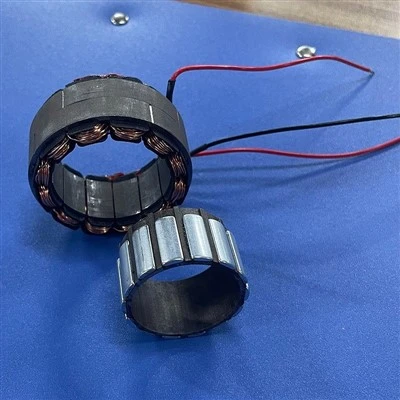
If you’re in the market for brushless DC motors, we’d love to talk to you. Our team of experts can help you choose the right motor with the best rotor design for your specific application. We can also work with you to customize a motor if your requirements are unique.
Robot Brushless Motor Contact us today to start a conversation about your motor needs. We’re looking forward to working with you to find the perfect brushless DC motor solution.
References
- Lawler, R. (2016). Electric Motors and Drives: Fundamentals, Types and Applications. Newnes.
- Čolak, D. (2017). Brushless DC Motors and Electric Vehicles. In – Tech Open Access Publisher.
Shenzhen HengDrive Technologies Co., Ltd.
Shenzhen HengDrive Technologies Co., Ltd. is one of the most professional brushless dc motor manufacturers and suppliers in China, specialized in providing high quality customized service. We warmly welcome you to buy the newest brushless dc motor in stock here from our factory.
Address: Building A & F, FuNing Hi-Tech Park, XinTian Road, FuHai Street, BaoAn District, ShenZhen, GuangDong Province, China.
E-mail: Marketing001@hengdrive.com
WebSite: https://www.hengdrivemotor.com/
