As a provider in the metal 3D printing industry, I often get asked about the surface finish of metal 3D printed parts. Metal 3D printing, also known as additive manufacturing, has revolutionized the way we create complex metal components. However, the surface finish of these printed parts is a crucial aspect that can significantly impact their functionality, aesthetics, and overall quality. Metal 3D Printing
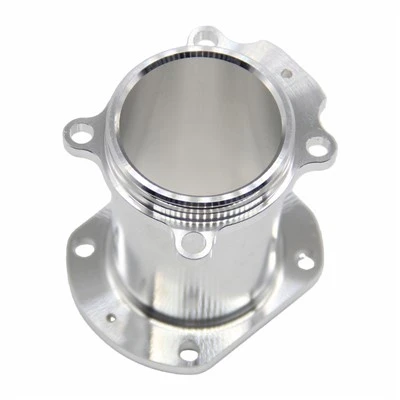
Understanding the Basics of Metal 3D Printing Surface Finish
The surface finish of metal 3D printed parts is quite different from that of traditionally manufactured parts. In traditional manufacturing methods such as machining, the surface is created by removing material, which can result in a smooth and precise finish. In contrast, metal 3D printing builds parts layer by layer, which can leave characteristic stair – stepping effects and rough surface textures.
The surface finish of metal 3D printed parts is influenced by several factors. Firstly, the layer thickness plays a vital role. A smaller layer thickness generally leads to a smoother surface finish because there are fewer steps between each layer. For example, if we use a 0.05mm layer thickness instead of 0.1mm, the printed part will have a finer surface with less visible layer lines.
The printing technology also affects the surface finish. Different metal 3D printing technologies, such as Powder Bed Fusion (PBF) and Directed Energy Deposition (DED), have distinct characteristics. In PBF, a laser or electron beam selectively melts powder particles in a powder bed. This process can produce relatively fine – detailed parts, but the surface may still have some porosity and rougheness due to the nature of powder – based manufacturing. DED, on the other hand, involves melting metal powder or wire as it is deposited onto the build surface. This technology is often used for larger parts and repairs, and the surface finish may be coarser compared to PBF.
Types of Surface Finishes in Metal 3D Printing
As – Printed Surface
The as – printed surface is the state of the part right after it is removed from the 3D printer. This surface typically shows the layer – by – layer marks and may have some powder particles adhered to it. The as – printed surface can vary in roughness depending on the printing parameters and the type of metal used. For some applications where cost is a major concern and a high – precision surface is not required, the as – printed surface may be sufficient. For example, in some industrial fixtures or prototypes, the as – printed surface can provide the necessary functionality without the need for additional finishing processes.
Post – Processing for Surface Improvement
To achieve a better surface finish, post – processing steps are often necessary. One of the most common post – processing methods is machining. This can include milling, turning, or grinding operations. Machining can remove the outer layer of the printed part, eliminating the layer lines and achieving a smooth surface with high dimensional accuracy. For example, if a metal 3D printed part needs to fit precisely into another component, machining can ensure the required tolerances are met.
Another post – processing technique is polishing. Polishing can be mechanical or chemical. Mechanical polishing involves using abrasive materials to smooth the surface, while chemical polishing uses chemical solutions to dissolve the surface material and create a smooth finish. Polishing can significantly improve the aesthetics of the part and also reduce surface roughness. This is particularly useful for parts that require a high – gloss or mirror – like finish, such as jewelry or decorative items.
Shot peening is another method used for surface improvement. It involves bombarding the surface of the part with small shots, which can create a compressive stress layer on the surface. This not only improves the surface finish but also enhances the fatigue resistance of the part. Shot peening is commonly used in aerospace and automotive applications where the parts are subjected to high stress and fatigue.
Specific Surface Finishes for Different Applications
In the aerospace industry, metal 3D printed parts often require a high – quality surface finish. Components such as turbine blades need to have a smooth surface to reduce aerodynamic drag and improve efficiency. In this case, a combination of machining and polishing is usually employed to achieve the desired surface roughness and finish.
For medical applications, such as orthopedic implants, the surface finish is critical for biocompatibility and osseointegration. A porous surface finish can be beneficial for bone growth and attachment. Some metal 3D printing processes can create parts with a naturally porous surface, but additional surface treatments may be required to optimize the pore size and distribution.
In the automotive industry, the surface finish of metal 3D printed parts can affect both the performance and the appearance of the vehicle. Engine components may need a smooth surface to reduce friction and wear, while exterior parts may require a painted or coated finish for protection and aesthetics.
Challenges in Achieving the Desired Surface Finish
One of the main challenges in achieving the desired surface finish in metal 3D printing is the complexity of the part geometry. Complex geometries with internal channels, overhangs, and thin walls can be difficult to finish. For example, it can be challenging to machine the internal surfaces of a part with small, intricate channels. In such cases, alternative finishing methods or modifications to the printing process may be required.
Another challenge is the choice of the post – processing method. The wrong post – processing method can damage the part or lead to dimensional inaccuracies. For instance, excessive polishing can remove too much material and change the dimensions of the part, while aggressive machining can cause residual stresses that may affect the part’s performance.
Cost is also a significant factor. Post – processing operations add to the overall cost of the part. For large – scale production, minimizing the cost of surface finishing while maintaining the required quality is a constant challenge.
Our Capabilities as a Metal 3D Printing Supplier
As a metal 3D printing supplier, we have extensive experience in dealing with different surface finishes. We understand the technical requirements of various industries and can offer customized solutions to meet our customers’ needs.
We have a team of experienced engineers who are well – versed in both metal 3D printing technology and post – processing techniques. They can optimize the printing parameters to achieve the best possible as – printed surface and then select the most appropriate post – processing method based on the part’s geometry, application, and budget.
We use state – of – the – art equipment for post – processing, including high – precision machining centers, polishing machines, and shot peening equipment. This allows us to provide a wide range of surface finishes, from rough – as – printed for quick prototyping to ultra – smooth and high – gloss finishes for high – end applications.
We also offer quality control services to ensure that the surface finish of each printed part meets the required standards. Our quality control processes include surface roughness measurement, dimensional inspection, and visual inspection.
Conclusion
The surface finish of metal 3D printed parts is a complex but crucial aspect of the manufacturing process. It is influenced by various factors such as layer thickness, printing technology, and post – processing methods. Achieving the desired surface finish can be challenging, especially for complex geometries, but with the right expertise and equipment, it is possible to meet the high – quality standards required by different industries.
Precision CNC Machining If you are in need of metal 3D printed parts with specific surface finish requirements, we invite you to contact us for a detailed discussion. Our team is ready to work with you to develop the best solutions for your projects. Whether you are in the aerospace, medical, automotive, or any other industry, we can provide you with high – quality metal 3D printed parts with excellent surface finishes. Let’s start a conversation about your needs and see how we can collaborate to bring your ideas to life.
References
- Additive Manufacturing Technologies: 3D Printing, Rapid Prototyping, and Direct Digital Manufacturing by Ian Gibson, David W. Rosen, Brent Stucker.
- Metal 3D Printing: From Technology to Application by various experts in the field, published by a leading engineering publisher.
- Journal of Materials Processing Technology, various articles on surface finish of metal 3D printed parts.
Shenzhen Multi-Wins Precision Technology Co., Ltd.
As one of the most professional metal 3d printing manufacturers and suppliers in China, we have world-leading production equipment and strong manufacturing capabilities. Please feel free to buy customized metal 3d printing made in China here from our factory. Also, quotation is available.
Address: 1 Phase, Yi’an City Central Garden, Longfei Avenue, Longgang District, Shenzhen, GD, China. 518100
E-mail: info@multi-wins.com
WebSite: https://www.multi-wins.com/
