Hey everyone, this is Jake from the sintered metal powder filter team—we get questions all the time from folks who just ordered (or are about to order) our filters, asking what they actually need to get them installed right. I’ve seen what happens when someone skips a step or uses the wrong part, so let’s break this down like we would over a coffee at a trade show. No stuffy engineering jargon, just real, actionable stuff that’ll save you headaches down the line. Sintered Metal Powder Filter
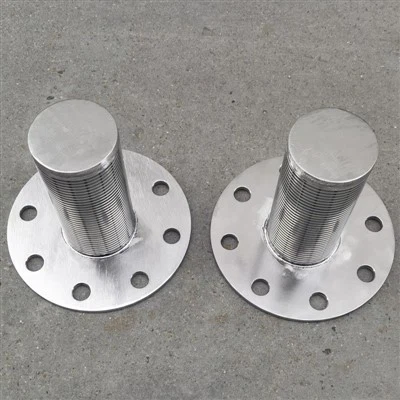
First off, let’s start with the basics: what kind of system are you dropping these filters into? Our sintered metal powder filters aren’t one-size-fits-all, and getting the installation requirements right starts before you even open the package. The first big call is the operating environment. I’m not just talking “it’s a water system”—I mean, what’s the pressure inside your piping? What’s the temp of the fluid or gas flowing through? And most importantly, what’s that fluid made of?
Let’s get specific. For pressure: our standard filters are rated for 150 PSI and 300 PSI options, but if your system runs at 500 PSI, the standard gaskets and fittings won’t hold. We’ve had a customer use a 150 PSI filter on a pressure washer line last year—by the time we got a panic call, the filter had blown out, metal shavings got into their pump, and they had to replace the whole unit. Moral of that story: double-check pressure ratings before you buy, but even if you already have the filter, don’t wing the installation pressure. Make sure your system’s max operating pressure is 10-15% under the filter’s rated pressure to give it a little buffer—vibration and pressure spikes are way more common than people think.
Next up, temperature. Our filters work from -40°F up to 600°F, but if you’re handling something like superheated steam (say 550°F), you can’t use the nitrile gaskets that come standard. Nitrile melts around 250°F, so you’d need silicone or high-temperature graphite gaskets instead. We always include a spec sheet with every order, and it’s got the exact gasket type you need—but if you’re ordering a replacement filter and lost the sheet, shoot us a message (we’ll get into how to reach us later) and we’ll send it over fast. Don’t guess here, either. A melted gasket isn’t just a leak—it’s a contaminant breach, and that’s the kind of thing that shuts down a whole production line.
Then there’s the fluid compatibility. This is the big one most people miss. Sintered metal filters (we use 316L stainless, Hastelloy, and Inconel for most orders) are corrosion-resistant, but they’re not invincible. If you’re filtering highly acidic liquid (pH under 2), 316L will hold up for a while, but Hastelloy is non-negotiable. We had a brewery client try to use our 316L filters for their wort pH adjustment last quarter—after 2 weeks, the filter started pitting, and small metal particles got into their beer. They had to dump 500 barrels of product, which was way more expensive than ordering the right filter upfront. So check your fluid’s pH, any chemicals it’s mixed with (cleaning agents are a big one—caustic cleaners can eat through some alloys), and even if there’s a lot of debris that could scratch the filter surface. Scratches lead to gaps in the sintered matrix, which let smaller particles pass through.
Okay, now that we’ve covered pre-install checks, let’s move to the physical installation. You can’t just twist the filter into place and call it good—how you mount it matters a lot. First, the piping connections. Our filters come in two main types: threaded (NPT, BSP) and flanged. If you’re using threaded, you cannot use Teflon tape that’s only on the threads—wait, no, actually Teflon tape can work, but don’t overdo it. Too much tape gets pushed into the system, and that’s a contaminant. We recommend PTFE thread sealant paste instead—it’s thin, doesn’t flake off, and gives a better seal. If you’re using flanged connections, don’t over-tighten the bolts. Over-tightening warps the filter’s end caps (especially the thin ones we make for high-flow applications) and causes leaks. Tighten them in a crisscross pattern, like you would a tire lug nut, to distribute pressure evenly.
Then there’s the filter’s orientation. This is super simple, but so many people get it wrong. Sintered metal powder filters have a “flow direction” arrow on the end cap—always go with that, never reverse it. Why? Because the particles get trapped in the tiny gaps between the sintered metal particles, and if you run fluid backwards, you’ll dislodge those particles, which then pass through the filter. That’s basically turning your filter into a particle cannon, and trust me, you don’t want that in your system. We had a food processing plant do this once—they ran the filter backwards to “clean” it, and the metal shavings got into their sauce, leading to a recall. They learned the hard way, but we fixed their system after that.
Now, what about the housing? The filter only works as well as the housing it’s in. The housing has to be sized for the filter’s dimensions, obviously, but also, the housing’s interior has to be clean before you put the filter in. No dirt, no metal shavings, no old gaskets left over from the last filter. We always tell customers to blow out the housing with compressed air (low pressure—under 30 PSI) before installing the new filter. That way, any stray debris doesn’t scratch the filter or get stuck in the gaps. Also, if you’re reusing a housing (which we don’t recommend for high-purity systems, but okay for some industrial ones), make sure the old gasket grooves are smooth. Bumps or residue there will keep the new gasket from sealing right, leading to leaks.
Wait, let’s talk about pre-use prep too, because that’s part of installation. A lot of people get the filter home, throw it in, and turn on the system right away. Don’t do that. For filters that go into liquid systems, we recommend a flush before use. Run the fluid through the filter at low pressure for 15-20 minutes first. This removes any loose powder from the sintered surface—we clean them before shipping, but sometimes tiny particles get trapped in the crevices during shipping or handling. If you skip the flush, those particles will get pushed into your system immediately, which is not ideal. For gas filters, a low-pressure purge with the same gas you’ll be using works the same way—gets rid of any leftover manufacturing dust.
Oh, and handling the filter itself. These are metal, but they’re not unbreakable. Don’t drop them, don’t bang them against the housing, don’t twist them hard when installing. The sintered surface is porous, but it’s also fragile—impacts can crack the filter, which makes it useless. We include gloves with every order, by the way—wear them! Oil and dirt from your hands can contaminate the filter, especially if it’s for a food or pharmaceutical system. We’ve had a lab client tell us they skipped the gloves, and their fingerprints left residues that messed up a batch of lab samples. So gloves on, handle with care, no roughhousing.
Let’s also cover some special cases, because I know you guys have weird systems. If you’re using a filter in a vacuum system (like for vapor capture), the pressure ratings are a little different. Our filters work for vacuum down to 29.5 inHg, but make sure the housing is rated for vacuum too—regular pressure housings can collapse under vacuum. We had a chemical processing customer use a standard pressure housing for their vacuum system, and the housing caved in, ruining two filters and causing a shutdown. Not fun. If you’re working with high-purity applications (pharmaceuticals, semiconductors), we also offer electropolished filters, which have a smoother surface that’s easier to clean. The installation for those is the same, but the flush should be with deionized water instead of regular tap water, to avoid mineral buildup.
Wait, what about regular maintenance related to installation? Once it’s in, you don’t just forget it. Install a pressure gauge on the inlet side of the filter housing—when the pressure difference (the differential pressure) across the filter hits 15 PSI, it’s time to replace or backflush the filter. Don’t let it go higher than that, because the pressure can damage the filter’s structure. We always recommend adding a differential pressure gauge during installation, even if you think you don’t need it. It’s a small part that saves you from a lot of big problems.
Let me wrap this up with a quick recap, because I know I threw a lot at you. The key installation requirements boil down to: 1) Match filter specs to your system’s pressure, temp, and fluid composition before you order, 2) Use the right gaskets and fittings, no over-tightening or over-sealing, 3) Follow the flow direction arrow, 4) Keep everything (filter, housing) super clean, 5) Prep (flush/purge) before first use, 6) Add a differential pressure gauge so you know when to change the filter.
Look, I’ve been in this game for 8 years, and I’ve seen almost every mistake you can make with sintered metal powder filters. The good news is, most of these issues are super avoidable if you take 10 extra minutes to check things before you install. No need to overcomplicate it—just follow the spec sheet we send, and if you have questions, reach out. We’re not just a supplier, we’re here to help make your system work right.
If you’re ready to order a filter for your next project, or you have questions about the right specs for your setup, hit us up anytime. We’re happy to walk you through every step, from choosing the right material to making sure the installation goes smooth. No hoops to jump through, no sales pitches that skip the important stuff. That’s how we do things.

Don’t hesitate to reach out if you need anything—we’re here for you every step of the way.
Sintered Fibre Felt Material and Filter References
- ASME B31.3, Process Piping Code, American Society of Mechanical Engineers
- Sintered Metal Filters: Material Compatibility Guidelines, Custom Filter Solutions Technical Manual, 2022
- Pressure Vessel Housing Requirements for Industrial Filtration, Filtration Industry Association (FIA) Standards, 2021
- Differential Pressure Monitoring for Filter Operation, International Society of Automation (ISA) Standard 75.01.01
Henan Easy Filter Equipment Co., Ltd.
As one of the leading sintered metal powder filter manufacturers and suppliers in China, we offer a wide range of products with superior quality. Please rest assured to buy advanced sintered metal powder filter from our factory. We also accept customized orders.
Address: Apartment No.1, Building No.2, Zhengshang Jinyushijia, Xinzhong Street, Xinxiang, Henan, China.
E-mail: vivian@easyfiltertech.com
WebSite: https://www.easyfilter-china.com/
