Hey there—if you’ve ever stood near a car getting pressure-washed, watched a greenhouse fog tomato plants at dawn, or wondered how a snowmaking gun blasts that fine, powdery fluff, you’ve interacted with a high-pressure nozzle’s spray pattern. As a high-pressure nozzle supplier, I get asked this question all the time: “Wait, what even IS that spray pattern, exactly, when you’re working with pressures way higher than a garden hose?” Let’s break this down like I’m explaining it to a buddy who’s new to industrial cleaning, greenhouse misting, or snowmaking—no stuffy jargon, just real talk about how these nozzles actually work. High Pressure Nozzle
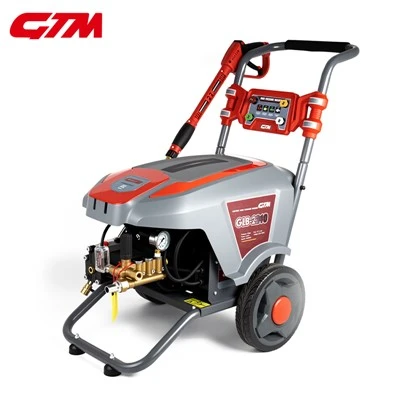
First, let’s get one thing straight: high pressure here isn’t your 50 PSI garden hose. We’re talking 1,000 PSI all the way up to 40,000+ PSI (for things like concrete cutting or heavy-duty industrial stripping). That pressure doesn’t just make water shoot out faster—it completely changes how the liquid breaks apart into that spray you see, which is the core of the pattern. Low-pressure nozzles (like the ones on your kitchen sink) just dribble or fan a flat sheet at best, but high pressure? You’re basically splitting the liquid into tiny droplets right at the tip, which is why the pattern is way more precise, versatile, and powerful.
Let’s start with the basics of what defines a spray pattern, because it’s not just “shape”—it’s a mix of droplet size, distribution across the spray, spray angle, and how consistent that all is from tip to tip. If your nozzle’s spray pattern is all over the place (like, half big droplets and half mist, or a 10-degree angle one minute and 50 the next), that’s a useless nozzle for almost any job. I can’t tell you how many times I’ve gotten a call from a guy who bought a cheap off-brand nozzle online, and he’s like “It’s garbage—why does it spray weird?” 9 times out of 10, it’s because the cheap one cuts corners on the internal design, so the pressure isn’t being controlled evenly, and the spray pattern gets distorted.
Now, the main spray patterns you’ll see from high-pressure nozzles, and when each matters—because that’s what people actually care about, not just terminology.
First up: Solid Jet (or Straight Stream) Pattern. This is the one you think of when you hear “high-pressure spray” for heavy duty. It’s a tight, uniform, straight column of liquid (or even abrasive slurry, for some industrial jobs) that stays together way longer than a low-pressure stream. How does the nozzle make this? It has a tiny, precision-machined orifice (the hole at the tip) and a swirl chamber that’s not there—wait, no, solid jet nozzles don’t swirl. They have a straight inlet that guides the pressurized fluid right through the orifice with zero rotation. So instead of spreading out, the momentum of the pressurized liquid keeps it compact until it hits a surface, where it blasts with insane force. This is the pattern we use for things like graffiti removal—you can hit a 1-inch spot with pinpoint accuracy, no overspray. Or for pipe cleaning: you shove the jet through a pipe, and it blasts away gunk on the walls. The downside? It’s super narrow, so you’re moving the nozzle around a lot to cover a big area. Also, if you hold it too close, it can etch concrete or chip paint—so for soft surfaces, this is too harsh. I remember a customer who tried to use a solid jet to clean his car’s undercarriage and ended up punching a small hole in his fuel tank. Oops.
Next: Flat Fan Pattern. This is the workhorse of high-pressure nozzles, used for everything from washing cars to cleaning warehouse floors to applying pesticides in agriculture. It’s exactly what it sounds like: a thin, flat sheet of spray that spreads out in a fan shape. The angle is adjustable usually—15 degrees (super narrow, for edge cleaning) up to 110 degrees (wide, for covering big surfaces fast). How does this happen? The nozzle has a slotted orifice (not a round one) and often a small swirl chamber that pushes the liquid outward evenly as it exits. The key here is that the spray is uniform across the entire fan—no thick spots in the middle or thin edges, which is what makes it good for consistency. For example, when a cleaning contractor washes a fleet of delivery trucks, a 25-degree flat fan nozzle means every truck gets the same amount of pressure and spray, so they don’t have to go over spots twice. For farmers, a wide 80-degree flat fan nozzle on a sprayer covers 10 feet per pass, so they can spray an acre in half the time. The catch here: the edges of the fan are a little less dense than the center, so you have to overlap passes by like 20% to get full coverage. Cheap nozzles often have jagged slots, so the edges are uneven—you’ll see gaps in your coverage, which means you’re wasting chemicals or cleaning product.
Then we have the Full Cone Pattern. This is the misty, round spray that looks like a fog or a cloud. It’s super popular for greenhouses (misting plants to keep humidity up), cooling towers (spraying water to cool air), snowmaking, and even some industrial cooling applications. The full cone is a perfect, 360-degree round spray, with droplets that are mostly the same size (more on that in a sec). How do you make this? The nozzle has internal vanes that spin the pressurized liquid before it exits the orifice. Imagine stirring a cup of water and then poking a hole in the bottom— the spinning makes the water spread out in a circle. The size of the droplets depends on pressure and the orifice size: higher pressure = smaller droplets, which is good for misting; lower pressure = bigger droplets, good for cleaning delicate surfaces like fruits and veggies in a wash line. I worked with a local hydroponics farm last year that was using a cheap full cone nozzle, and their humidity was all over the place—some plants were too wet, some too dry. We swapped in our precision-engineered full cone nozzles, and now their humidity stays at 75% exactly, no hot spots. That’s the difference a good nozzle makes.
Wait, there’s also the Hollow Cone Pattern, which is a variation of full cone. Instead of a solid round spray, it’s a ring-shaped spray, like a donut. People use this for things like fire suppression (it spreads faster to cover a big area) and some lubrication applications. The swirl in the nozzle is a little different—instead of pushing liquid toward the center, it pushes it toward the outer edge, so the middle is empty. It’s less common than the other three, but super specific for jobs that need wide, fast coverage without too much overspray.
Now, let’s talk about what makes a high-pressure nozzle’s spray pattern actually high-pressure vs. low-pressure. I mentioned earlier that pressure breaks the liquid into droplets, but here’s the science bit that actually matters: at pressures above 1,000 PSI, the liquid’s surface tension is overcome almost immediately as it exits the nozzle. Low-pressure spray has big, inconsistent droplets—like, 500 microns or more, which is why it gets everything wet but doesn’t blast anything. High-pressure nozzles break droplets into 50 to 200 microns, depending on the pattern and pressure. That’s small enough to stay suspended in air (great for misting) but heavy enough to have impact (great for cleaning). The consistency of those droplets is what separates a good nozzle from a bad one. A cheap nozzle might have droplets ranging from 20 microns to 500 microns, so your spray is a mess—half mist, half big drips. A quality high-pressure nozzle has a droplet size variation of less than 20%, so the entire spray pattern behaves exactly how you want it to.
Another big factor in the spray pattern: nozzle wear. I can’t stress this enough. Nozzles aren’t indestructible, especially if you’re using them with abrasive materials (like sandblasting slurry or wastewater with sediment). Even with water, over time, the orifice and internal components wear down, which changes the spray pattern. A worn nozzle might start with a 25-degree flat fan, then after 100 hours of use, it’s a 35-degree fan with uneven edges. That means you’re using more water or cleaning product than you need, and the job takes longer. We always tell customers to check their nozzles every 50 hours, and replace them if the pattern looks off. A lot of people think a nozzle is a “set it and forget it” part, but it’s actually a wear item—like a tire, it loses shape over time.
Let’s also clear up a common myth: higher pressure doesn’t always equal a better spray pattern. If you have a nozzle designed for 2,000 PSI and you crank it up to 5,000 PSI, you’re not getting a more powerful spray—you’re distorting the pattern, making more tiny mist droplets that drift away, and even damaging the nozzle faster. Every nozzle is calibrated for a specific pressure range, and that calibration is what gives you the consistent pattern. We see this all the time with people who buy a pressure washer without matching the nozzle to the pump’s PSI. They put on a nozzle rated for 3,000 PSI on a pump that’s only putting out 1,500 PSI, and the spray pattern is weak and uneven. Or they go the other way, overpressure, and the nozzle starts spraying in a weird oval instead of a fan.
Now, how do you pick the right spray pattern for your job? It’s not just guessing—here’s a quick cheat sheet I give to every customer:
- Heavy-duty cleaning (concrete, graffiti, construction equipment): Solid Jet (narrow, high impact)
- Medium cleaning (cars, warehouse floors, food processing equipment): Flat Fan (adjustable angle, uniform coverage)
- Humidity control, cooling, snowmaking, delicate washing (produce, greenhouse plants): Full Cone (consistent, misty droplets)
- Fast wide coverage, fire suppression: Hollow Cone (ring shape, spread fast)
I’ve had customers come to me thinking they just need “a pressure nozzle” and leave with a specific pattern, or even a combo nozzle that switches between two patterns for different parts of a job. For example, a window cleaner might use a solid jet to blast off caked-on gunk from the bottom of a window, then switch to a wide flat fan to rinse it clean without streaks.
At the end of the day, the spray pattern of a high-pressure nozzle isn’t just a visual thing—it’s the whole reason the nozzle works for your specific application. A good pattern means less waste, less time, better results. If you’re in the market for high-pressure nozzles, whether you’re a contractor, farmer, greenhouse operator, or industrial maintenance team, we’re here to help you figure out exactly what pattern and specs you need for your job. No jargon, no pushy sales pitches—just straight talk about what works and what doesn’t. Reach out to connect on your next project, and we can walk you through the best options for your spray needs.
Washer Hose References
- Sommerfeld, M., & Huber, N. (1999). Experimental analysis of the spray formation of flat fan nozzles at high pressure. International Journal of Multiphase Flow, 25(8), 1377-1398.
- Lefebvre, A. H. (1989). Atomization and Sprays. Hemisphere Publishing Corporation.
- Vallet, G., & Berlemont, A. (2000). Spray characteristics of pressure-swirl nozzles for high-pressure applications. Atomization and Sprays, 10(3), 283-301.
Zhejiang GTM Hi-Tech Intelligent Equipment Co., Ltd.
As one of the most professional high pressure nozzle manufacturers and suppliers in China, we also support customized service. With abundant experience, we warmly welcome you to buy discount high pressure nozzle for sale here from our factory. For price consultation, contact us.
Address: No.5 of Changjiang Road, 2nd Economic Development Zone of Wenling, Zhejiang, China
E-mail: yehuanting1@hongyemfg.com
WebSite: https://www.gtm-plungerpump.com/
