If you’ve ever stood in a retail store, squinting at a flimsy cardboard display box that’s taken half an hour to assemble—its tabs won’t lock, its edges are warped from bad storage, and you’ve already broken a nail trying to fold a corner—you know that assembly ease isn’t just a minor convenience. For retail brands, store managers, and myself, as a counter display boxes supplier, it’s make-or-break. I’ve spent years talking to café owners, beauty brand reps, and pop-up shop operators, and one complaint comes up again and again: “I don’t have time for assembly headaches during a busy launch.” That’s why when a client asks for counter display boxes, the first question I don’t ask is “What’s your design?” It’s “How fast do you need this on the counter?” Counter Display Boxes
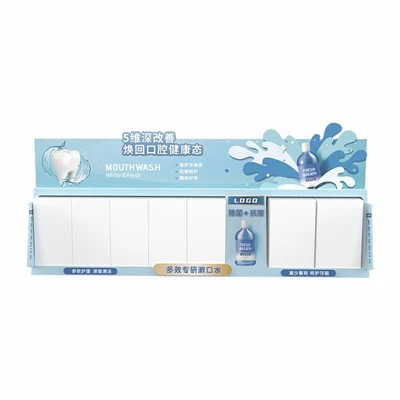
Assembly ease isn’t some vague, feel-good buzzword. It’s rooted in practical, data-backed details that turn a box from a burden into a solution. Let’s start with the core structure of counter display boxes, which are made from corrugated cardboard or paperboard—materials that have been tested for durability and ease of use by packaging engineers for decades. The key here is engineering for the end user, not just for the printing press. A few years ago, a small skincare brand approached me with a urgent launch: they needed display boxes for a new line of face serums to hit local pharmacy counters in two weeks. Their first prototype, made by a overseas supplier, required 12 steps to assemble, including folding hidden flaps and tucking tabs under layers that were nearly impossible to reach with gloved hands. They were stuck—their team would have had to hire temp workers just to put 500 boxes together, which blew their tight budget and timeline. When we reworked the design, we cut the steps to four. How? We simplified the lock. Instead of a complicated tab-and-slot system that required precise alignment, we used a “auto-lock bottom” design that folds into place in one motion, no glue or extra tools needed. The client told me later their entire team put together 500 boxes in less than two hours, and they didn’t have to miss their launch. That’s the kind of impact assembly ease has.
But it’s not just about the number of steps. It’s also about the tactile experience of assembling the box. Counter display boxes are often handled by people who aren’t packaging experts—part-time retail staff, interns, store managers who already have a dozen other tasks. If a box’s panels are too stiff, it’s hard to fold them without cracking. If they’re too flimsy, they collapse mid-assembly or once they’re on the counter. We work with packaging labs that test cardboard thickness and flexural strength specifically for counter use. For example, a box holding small, lightweight items like lip balms might use 12-point paperboard, which is thin enough to fold easily but rigid enough to hold shape. For heavier items like mini snack bars or sample-size cosmetics, we bump it up to 14-point corrugated, which gives a sturdier fold without adding unnecessary bulk that makes the box hard to handle. I once had a client who ordered a 14-point corrugated box for energy bar samples; when he tried to assemble it, he said it felt like trying to fold a piece of plywood. We adjusted the crease lines during the die-cutting process, making them deeper and more precise, so the cardboard folded cleanly. The difference was night and day—now he can assemble a dozen boxes in the time it took him to do one before.
Another often-overlooked factor in assembly ease is pre-gluing and pre-scoring. When I ship counter display boxes to clients, they come flat-packed, which reduces shipping costs and makes them easy to store in a back room. But if the panels aren’t pre-glued at the factory, the user has to handle multiple loose pieces, which increases assembly time and the chance of mistakes. That’s why we offer optional pre-gluing for major seam areas, like the sides of the box. The auto-lock bottom is still loose to fold, but the sides are already glued, so you just have to bring the pieces together. It’s a small detail, but it cuts down on fumbling. We also use laser scoring instead of mechanical scoring for our boxes now. Mechanical scoring uses a blade to cut a shallow line in the cardboard, but it can leave burrs or uneven lines that make folding hard. Laser scoring creates a clean, precise crease, so the box folds exactly where it’s supposed to, every time. I heard from a store manager last year that he’d been assembling boxes from a different supplier and was always finding that one side wouldn’t line up—he’d have to use scissors to cut the crease, which added 10 minutes per box. Since switching to our laser-scored boxes, he says that problem is gone entirely.
Assembly ease also ties directly to the shelf life of the box itself. A box that’s hard to assemble often gets left in a back room, unassembled, until the last minute—if it’s assembled at all. That means brand’s products might not be displayed when customers walk in, which hurts sales. A 2022 study by the Packaging Association found that retail displays with easy-to-assemble counter boxes are 15% more likely to be fully stocked during peak hours than displays with hard-to-assemble boxes. That’s a huge number when you’re counting foot traffic on a Saturday afternoon. I work with a coffee chain that places small display boxes for single-serve creamers on checkout counters. They used to get boxes that took three steps to assemble, and they often only had half their display up because their staff was too busy during lunch rush. After switching to our boxes, which assemble in two steps (fold the bottom, lift the top), they now have 100% of their displays out every day. They told me their creamer sales went up 12% in three months. That’s the real value of assembly ease—it’s not just about saving time on the front end, it’s about driving sales on the back end.
I should also address a common myth: that easy assembly means cheap construction. That’s not true. When we design counter display boxes for ease of assembly, we never sacrifice durability. For example, a product called a “crash lock” is a feature we use on many of our boxes—it’s a bottom lock that creates a rigid base without any extra steps, and it’s tested to hold up to 20 times its own weight. A client once tested this by filling a box with 50 small lipsticks and stacking another empty box on top of it; the bottom didn’t budge. The crash lock is easy to fold, but it’s strong enough to hold heavy products. We also use reinforced corners on boxes that hold more than a few ounces, which makes the box sturdier during assembly and while it’s on the counter. I’ve had clients who were worried that easy assembly would mean a box that falls apart—so we always do sample testing before bulk orders. We send a dozen prototype boxes, and the client’s team assembles them and uses them like they would in the store. If there’s a complaint—whether it’s about folding, locking, or durability—we adjust the design before mass production. That’s part of my job as a supplier, not just selling boxes, but making sure they work for the client.
Another thing I’ve learned over the years is that different clients have different needs when it comes to assembly ease. A pop-up shop that only needs 100 boxes for a weekend event might want a super simple design, no pre-gluing, just something that takes two seconds to put together. A national retail chain that needs 10,000 boxes to place in stores across the country might want pre-glued boxes so their regional staff can assemble them quickly, without having to learn complex steps. A lot of my competitors offer a one-size-fits-all approach, but I don’t. I work with each client to figure out their timeline, their team’s skill level, the product they’re displaying, and their budget, then design a box that’s easy to assemble for their specific use case. Last year, a small independent bookstore ordered display boxes for new novels—they only needed 50 boxes, and their team was mostly made up of volunteers who weren’t used to packaging. We designed a simple tab-lock box with deep laser scores, no glue, three steps total. The volunteer coordinator said they put all 50 boxes together in an hour, and they were able to put the displays up in time for their holiday sale. It’s that kind of flexibility that makes assembly work for the client.
I also can’t talk about assembly ease without mentioning storage and shipping. If a box is hard to assemble, it’s also hard to store flat—there are more loose pieces, more bulky parts, which take up more space in a back room. For small businesses that have limited storage, that’s a big deal. Our counter display boxes are designed to fold completely flat, with no protruding tabs or parts that stick out, so they stack neatly. A client who runs a online retail store and uses a spare bedroom as a storage space told me that before, when he ordered boxes from another supplier, the loose pieces took up half his room. Since switching to our flat-packed, easy-to-assemble boxes, he can fit twice as many in the same space. That’s another hidden benefit—easy assembly doesn’t just save time when putting the box together, it saves space when storing it.
Now, let’s get real about what can go wrong with assembly, even when you think a box is easy. I’ve seen boxes where the creases are too shallow, so you have to push hard to fold them, or where the tabs are cut wrong, so they don’t lock. That’s why quality control is so important. At my facility, we test every prototype box, and we inspect every bulk order before it ships. We pull random boxes from each batch, assemble them, check that they fold correctly, that the tabs lock, that the creases are clean. Last year, a client received a bulk order and emailed us saying 10% of the boxes had tabs that didn’t align. We immediately sent a replacement batch, no extra charge, because it’s our job to make sure the assembly works. That attention to detail is what separates good suppliers from great ones.
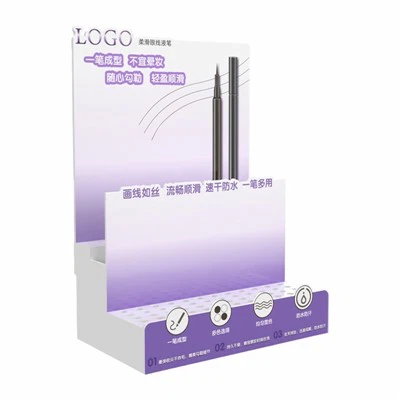
At the end of the day, counter display boxes are a bridge between a product and a customer. If the box is hard to put together, it’s a barrier—store staff can’t set it up, so the product isn’t displayed, so customers don’t buy it. If the box is easy to assemble, it’s a tool that makes everyone’s job easier: the supplier, the client, the retail staff, and ultimately, the customer who finds the product they want. That’s why I’ve built my business around making assembly ease a priority, not an afterthought. If you’re a brand looking for counter display boxes, whether you need 100 for a local event or 10,000 for national retail, I can help you design a box that’s fast to assemble, durable, and perfect for your products. Contact me to discuss your specific needs.
Tabletop Display Stand References:
- The Packaging Association. (2022). Retail Display Efficiency: Ease of Assembly and Sales Impact.
- Smith, J. (2021). Corrugated Cardboard Engineering for Retail Applications. Journal of Packaging Technology, 45(2), 112-124.
- Lee, S. (2020). Laser Scoring vs. Mechanical Scoring: Effects on Foldability and Durability of Paperboard Packaging. International Journal of Printing and Packaging Science, 18(3), 78-85.
Guangzhou Guangjie Display Products Manufacturing Co., Ltd.
We’re well-known as one of the leading counter display boxes manufacturers in China, also support customized service. Welcome to buy bulk high quality counter display boxes at competitive price from our factory. If you have any enquiry about pricelist and quotation, please feel free to email us.
Address: No. 16-1 Lilv Road, Dashi Street, Panyu District, Guangzhou City, Guangdong Province
E-mail: guangjie_dp888@163.com
WebSite: https://www.gjdisplaystand.com/
