If you’ve ever stood near a workshop or industrial facility where air moves loudly and steadily through large ducts to cool equipment or clear exhaust fumes, chances are you’ve encountered an axial fan. As an axial fan supplier, I get asked all the time: “What makes these fans work so reliably, even in harsh operating conditions?” The answer lies in something we rely on every day to refine our designs and meet customer demands: Computational Fluid Dynamics (CFD) analysis. Over 12 years in this industry, I’ve seen CFD turn a good fan into a great one—saving our clients time, money, and headaches down the line. Let me break down what CFD analysis for axial fans actually is, why it matters, and how it shapes the fans we deliver to businesses worldwide. Axial Fan
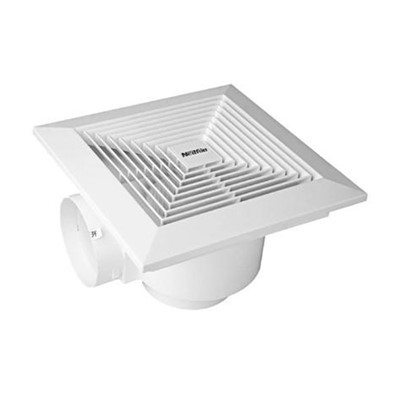
First, let’s start with the basics to set a foundation. An axial fan moves air parallel to the axis of the fan, meaning the air flows straight through the blades along the same line as the fan’s motor shaft—unlike centrifugal fans, which redirect air at a right angle. This design makes axial fans ideal for high-volume, low-pressure applications: think ventilation for warehouses, cooling for power generation turbines, or exhaust for manufacturing facilities. But building a fan that performs consistently isn’t just about slapping blades on a motor. Even small tweaks to blade angle, blade shape, or duct layout can make a huge difference in airflow efficiency, noise levels, and energy use. That’s where CFD comes in.
CFD is a branch of fluid mechanics that uses numerical analysis and algorithms to solve and visualize the equations that govern how fluids (in this case, air) move. Instead of building a physical prototype and testing it in a wind tunnel every time we make a change (which is both time-consuming and costly), we use CFD simulations to map out air flow around, through, and beyond a fan in a digital environment. For axial fans specifically, this means we can pull apart every part of the fan’s operation without ever lifting a wrench.
When we run a CFD analysis for an axial fan, the first step is to create a 3D model of the entire system. That model isn’t just the fan blades and motor—it includes the inlet duct, the outlet duct, the space around the fan, and even the obstacles or obstructions that might be in the air stream, like grilles, dampers, or structural beams our clients might install later. We break this model into thousands or millions of tiny “cells” (a process called meshing), each of which we calculate for air pressure, velocity, temperature, and turbulence. This granularity lets us see exactly what’s happening at every point, not just a single average value from a physical test.
One of the most critical things we measure with CFD for axial fans is airflow performance. For example, a client might need a fan to move 10,000 cubic feet of air per minute (CFM) at a specific static pressure to overcome duct losses. With CFD, we can adjust the pitch of the fan blades—small changes, like shifting the leading edge by just a few degrees—and instantly see if airflow increases or decreases. We can spot if air is getting “stuck” in the corners of the duct or eddying behind the blades, which would waste energy and reduce overall efficiency. Years ago, before I started using CFD regularly, we’d build a prototype blade, test it, and if it didn’t hit the CFM target, we’d have to rework the mold and start over. Now, we can run 10 different blade designs in CFD in a single day, pick the best one, and only build a physical prototype to confirm the results. That cuts our design time by more than half and saves our clients from paying for costly prototype mistakes.
Noise is another big factor, especially for clients who use axial fans in offices, residential areas, or facilities where noise regulations are strict. Axial fans can create a lot of noise if airflow is turbulent—think the high-pitched whine of a poorly designed fan in a small room. CFD lets us visualize turbulence: we can see where air is separating from the blade surface, creating those chaotic swirling eddies that turn into noise. For example, we once had a client in a manufacturing plant who complained their new axial fan was too loud, disrupting their office space adjacent to the production floor. We ran a CFD analysis on their existing fan and found that the blade tips were generating high-intensity turbulence because they were too close to the inlet duct wall. We adjusted the tip clearance (the gap between the blade and the duct) and refined the blade’s trailing edge to smooth airflow. The result was a 12-decibel noise reduction—enough to meet the client’s noise limit, and we only had to modify one small part of the blade, not rebuild the entire fan. That’s the power of CFD: it solves problems you can’t always see with the naked eye.
Energy efficiency is a third key benefit, and it’s something both axial fan suppliers and our clients care about deeply. Energy costs make up 30 to 40% of the total lifetime cost of a fan, according to industry data, so even a 5% efficiency gain adds up to thousands of dollars in savings over a fan’s 10 to 15 year lifespan. CFD helps us optimize the fan’s design to reduce drag. For instance, the blade’s camber (the curve along its length) affects how much air it moves with each rotation. If a blade is too curved, it creates unnecessary drag, forcing the motor to work harder. Too little curvature, and it won’t move enough air. CFD lets us fine-tune that camber perfectly for each application. We also study the fan’s hub-to-tip ratio: the hub is the central part the blades attach to, and the tip is the outer edge. A ratio that’s too low means the hub takes up too much space, reducing airflow; too high means the blade tips are too far from the center, creating inefficient tip vortices. With CFD, we can balance that ratio to get maximum airflow per watt of energy used.
Of course, CFD isn’t just about perfecting the fan itself—we also use it to design the duct system that goes with it, which is often the biggest source of airflow loss. A client might come to us with a duct layout they already have, and we can run CFD to test how their current setup will perform with our fan. For example, if a duct has a sharp 90-degree elbow right before the fan inlet, that can cause uneven airflow into the blades—one side of the fan gets more air than the other, leading to reduced efficiency and extra wear on the motor. We can simulate adding a flow straightener (a set of small vanes in the inlet duct) to fix that uneven airflow, showing the client exactly how much CFM they’ll gain, and how much energy they’ll save, by making that small adjustment. This is particularly useful for retrofit projects, where clients don’t want to rebuild their entire duct system—we can use CFD to show them the most cost-effective changes to pair with our fan.
I’ll be honest: CFD isn’t a perfect tool. It relies on accurate input data, and if you use a low-quality model, you’ll get misleading results. Over the years, I’ve learned that the best CFD analysis starts with deep knowledge of axial fans, not just programming skills. You have to understand how air behaves in real-world conditions—like how dust can accumulate on blades, or how high temperatures can change air density—and adjust your simulation accordingly. For example, a fan operating in a 120-degree F environment has less dense air than a fan in 70-degree F, so the CFD model needs to account for that to give accurate airflow numbers. Too often, I see companies run generic CFD simulations that don’t account for the specific conditions of each application, leading to fan designs that work great in a lab but fail in the field. That’s why, as a supplier, we don’t just sell you a fan—we run tailored CFD analyses for every order, based on your facility’s unique needs.
One example that sticks with me is a project we did for a large agricultural client who needed axial fans for their grain drying silos. Grain drying requires consistent, high-volume airflow at a specific static pressure to prevent mold and spoilage. The client had tried off-the-shelf fans before, but they were either too weak to dry the grain evenly or too powerful, wasting energy and drying out the grain too much. We ran a CFD analysis for their silo’s specific duct layout and the unique properties of grain air (which has a slightly different density than regular air) to design a custom blade set. The CFD model showed that a blade with a slightly reduced pitch and a rounded trailing edge would move exactly the right amount of air at the client’s static pressure, while also reducing noise to meet the farm’s local regulations. When we installed the fans, the client reported that their grain drying time dropped by 15%, and their energy bill for the fans fell by 22%—savings that added up to more than the cost of the fans in the first year. That’s when I realized CFD isn’t just a design tool; it’s a way to deliver real value to our clients.
So what does this mean for someone looking to purchase an axial fan? If you’re shopping around, don’t just look for fan size and CFM. Ask your supplier if they run CFD analyses to test their designs and tailor them to your application. A supplier that only builds one fan model and guesses at performance is going to cost you more in energy and maintenance over time. A supplier that uses CFD will work with you to understand your needs—whether that’s a fan for a warehouse, a power plant, or a farm—and design a fan that fits perfectly, no compromises.
At the end of the day, axial fans are simple machines in concept, but their performance depends on tiny, precise details that are invisible to the naked eye. CFD takes that guesswork out of the equation, letting us design fans that are efficient, quiet, and reliable. If you’re in the market for axial fans for your facility, I encourage you to reach out and discuss your specific requirements. We’ll run a custom CFD analysis to show you exactly how our fans will perform in your space, help you avoid costly mistakes, and make sure you get the right equipment for your needs.
Axial Fan References:
- Incropera, F. P., & DeWitt, D. P. (2002). Introduction to Heat Transfer (4th ed.). John Wiley & Sons.
- Wright, S. E., & Wood, D. H. (2004). “A Review of Axial Fan Aerodynamics and Noise Prediction.” Proceedings of the Institution of Mechanical Engineers, Part A: Journal of Power and Energy, vol. 218, no. 3, pp. 185-200.
- ASHRAE Handbook of Fundamentals. (2021). American Society of Heating, Refrigerating and Air-Conditioning Engineers.
Anhui Zhongxin Sanyuan Ventilation Equipment Co., Ltd.
We are one of the most professional axial fan manufacturers and suppliers in China, featured by quality products and good price. Please rest assured to buy customized axial fan made in China here from our factory. Also, pricelist is available.
Address: No. 1 Yuanxing Road, North District of Guangde Economic Development Zone, Guangde City, Xuancheng City, Anhui Province, China
E-mail: newsanyan@gmail.com
WebSite: https://www.newsanyan.com/
